Thanks guys, it's good to be back on Oldgas. Took some time off to catch up on some projects.
Back to Las Cruces and GaviotaLas Cruces was a casualty of the ever expanding highway like many small service towns along the 101. The State Highway Department wanted to speed up traffic and avoid the slow downs involved with having to drive through a town along the way, especially every 15 miles. Modern vehicles did not require the frequency of servicing of the early automobiles.
To continue our journey though, we have to travel back to the 1920's and thirties when temperamental cars and small gas tanks required more frequent attention.
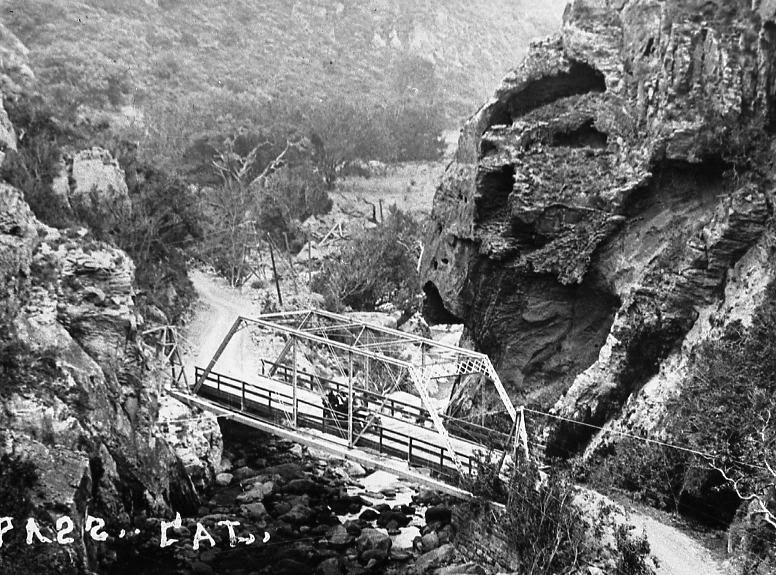
After crossing the rickety bridge at Gaviota most motorists were ready to stop in Las Cruces, at least to visit the restrooms. After 1931 the steel truss bridge at Gaviota was replaced with a concrete one that at least allowed two way traffic. The old bridge was moved to Las Cruces to replace a wooden one the crossed into the other side of town to the west of the highway as it became Highway 1.
Here is what the Gaviota bridge looked like before the concrete bridge.
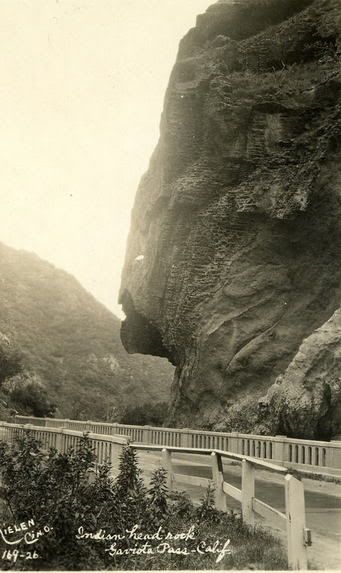
Here is the concrete bridge that replaced it in 1931. The famous indian head rock still guarded the entrance to the bridge.
And here is the old wood bridge at Las Cruces that would be replaced by the Gaviota steel bridge.
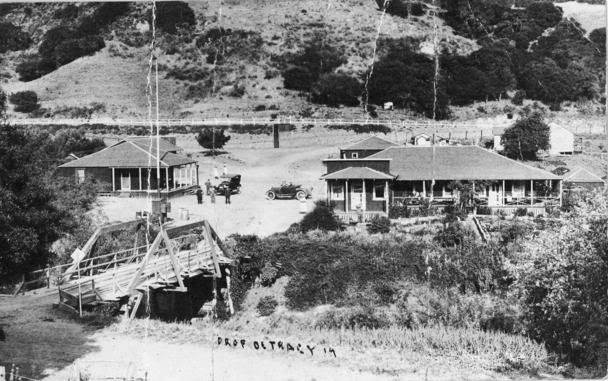
The other side of the highway in Las Cruces consisted of a tavern and store. At one time there was also a brothel to service the needs of the cowboys driving cattle to the Gaviota pier from ranches to the north and the roughnecks from the oil wells along the beaches to the south. Shell, Associated, Seaside, Barnsdall Rio Grande and many other producers had drilling operations dotting the coastline from Gaviota all the way to the Seaside Company headquarters in Summerland some 30-40 miles to the south.
Still more to come...
[This message has been edited by the poor mans museum (edited 11-29-2005).]


