
#285147
Tue Nov 15 2011 12:11 AM
|
Joined: Aug 2011
Posts: 24
Member
|
OP

Member
Joined: Aug 2011
Posts: 24 |
I am going to put up a 17ft tapered octagon post that has a 12" square flange on the bottom (with 4 holes for bolts). I intend to hang a round 6' porcelain sign off of it. (There is a bolt on arm that holds the sign)
I will be using a small bobcat excavator, putting in a 16" or 18" sonotube. (I guess the sign, post, lights etc. would weigh 450lbs)
1) How far down should I go (figure 4 or 5 feet?)
2) I have an underground wire coming in, do I just make a small hole in the sonotube and bring the wire though to the top? (armoured TEC burial cable no conduit)
3) What is the proper method to install the studs into the fresh concrete (I figure I will use a wooden template to hold the studs in place while the concrete hardens and to maintain the pattern)
4) I have seen this type of pole installed with nuts above and below the flange (vs. just having the flange bolted flatly to the concrete)- I figure there is great adventage to this as you could then tune up the pole in the event it starts the lean. The studs are much longer for this version.
Someone suggested I bend the bottoms of the studs into an L shape so they are less likely to pull out of the concrete.
Any input would be appreciated.
Last edited by Finder; Tue Nov 15 2011 12:21 AM.
|
|
|
Please - NO offers to Buy or Sell in this forum category
Statements such as, "I'm thinking about selling this." are considered an offer to sell.
|
|
|
|
Joined: Aug 2011
Posts: 24
Member
|
|
OP
Member
Joined: Aug 2011
Posts: 24 |
This is an example of what I mean for #4, except imagine there is a 17ft post coming off this "flange". 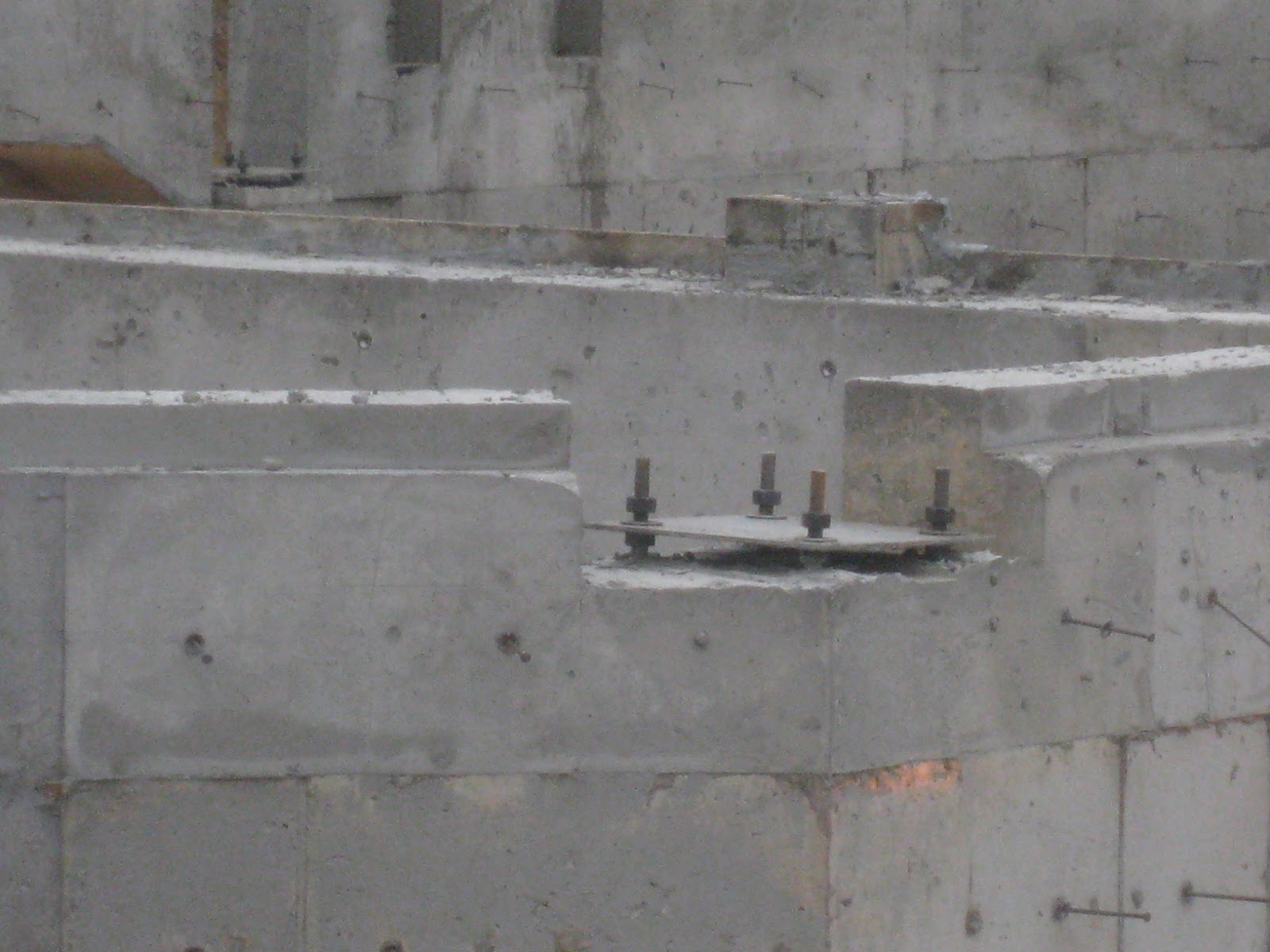
|
|
|
|
|
Joined: Apr 2007
Posts: 2,071
Veteran Member
|
|
Veteran Member
Joined: Apr 2007
Posts: 2,071 |
You're going to need more than an 18" sonotube to support that sign. When I installed my Texaco sign I framed up a 3'X 3' X 4 1/2' deep plywood form. I built a rebar cage and welded the mounting bolts to it and used a plywood spacer at the top of the bolts to keep it all aligned. I used plastic conduit and ran UF romex through it.
I'll email you the official 1936 Texaco plans if you'd like. Send me a PM if you want them.
|
|
|
|
|
Joined: Aug 2011
Posts: 24
Member
|
|
OP
Member
Joined: Aug 2011
Posts: 24 |
Thanks very much Scott - PM sent.
|
|
|
|
|
Joined: Feb 2003
Posts: 2,556 Likes: 46
Veteran Member
|
|
Veteran Member
Joined: Feb 2003
Posts: 2,556 Likes: 46 |
Scott installed his pole the correct way to compensate for weight and wind. Having placed several poles myself, I have done the same basic prep work and finish. In most cases, I use a 40" x 40" form the same 4 1/2' deep. Electrical should always be in plastic conduit....which is tied off to the rebar cage before pouring concrete. I usually weld my rebar cage to an old wheel at the base.....it prevents the whole unit from being pulled out during heavy wind....sign mounting bolts are welded to the cage with the plywood position jig jam-nutted to the ends. Be sure to leave enough bolt length above the finished concrete. These can always be cut off later. You "must" over-engineer this type of project. By not being extreemly careful in your attempt....you are leaving yourself open for disaster. Good luck, Paul www.severngaspumps.com
|
|
|
|
|
Joined: Nov 2002
Posts: 4,980 Likes: 21
Moderator
|
|
Moderator
Joined: Nov 2002
Posts: 4,980 Likes: 21 |
You're going to need more than an 18" sonotube to support that sign. When I installed my Texaco sign I framed up a 3'X 3' X 4 1/2' deep plywood form. I built a rebar cage and welded the mounting bolts to it and used a plywood spacer at the top of the bolts to keep it all aligned. I used plastic conduit and ran UF romex through it.
X2 this is the right way to do it. When we poured my footing, my neighbor (concrete engineer) came over and did some calculating and said something to the effect that a one mile per hour wind on my sign would put 10000 pounds of force on the base of the sign. Something to think about. On the other hand, I have seen some people not use much and they seem to stay up, for now.
FREEDOM oil items wanted.
|
|
|
|
|
Joined: Apr 2007
Posts: 2,071
Veteran Member
|
|
Veteran Member
Joined: Apr 2007
Posts: 2,071 |
Here's a picture of the finished project. I forgot to take pictures of the preliminary work. This was at my house in Wisconsin. I no longer own the house or sign. The sign is now on display in South Dakota at garagejunkies place. I still miss it......  Uploaded with ImageShack.us
|
|
|
|
|
Joined: Oct 2007
Posts: 12,293 Likes: 14
Veteran Member
|
|
Veteran Member
Joined: Oct 2007
Posts: 12,293 Likes: 14 |
If this sign is free to move in the wind, there won't be that much load on the pole. You definitely need a deeper hole than 18 inches tho! I recommend 3 1/2 feet minimum with a rebar cage to hold the mounting bolts. I would also use conduit for your wiring to avoid problems in the future.
The pole itself will generate very little if any wind resistance. The hanging sign will generate the most resistance but if allowed to move freely, or in a protected area, the resistance is minimal.
If you use a 2 foot diameter hole that is 4 feet deep and use a rebar cage for the attaching bolts, you should be fine. If you have competent cement people and the top is level, there is no need for an adjustment plate.
Everything Cities Service
Specializing in old Gas Pumps
kwfrith@gondtc.com
Cell#-701-739-6133
|
|
|
|
|
Joined: Jan 2011
Posts: 159
Petro Enthusiast
|
|
Petro Enthusiast
Joined: Jan 2011
Posts: 159 |
Here is a picture of mine that has been up for a couple of years now. I did mine the way most everyone has stated and I agree don't go light on the concrete. I dug a 4ft deep and 3ft wide hole that narrows to 2ft at the base. I also welded a cage around my bolts and drove rebar into the ground and tied everyting together. I also used a wood template on the bolts. I cut a hole in the middle of the template and pored concrete in. I did not remove the template until the very end. Worked great. 
|
|
|
|
|
Joined: Feb 2006
Posts: 398
Petro Enthusiast
|
|
Petro Enthusiast
Joined: Feb 2006
Posts: 398 |
I have 8 of these boulavard signs in my front yard,and they are all at least 4 1/2 feet deep and 30 inches around with re bar. 3/4 inch anchor bolts 36 inches long about like Scott said. One other thing I did since there are so many I actually angled them at a 45 degree angle to the prevailing west wind. They have not moved at all in 13 years.The conduit is almost a must, if you ever get another one you can refeed it from your first one. Norm
Norm Huff
|
|
|
|
|
Joined: Jan 2011
Posts: 159
Petro Enthusiast
|
|
Petro Enthusiast
Joined: Jan 2011
Posts: 159 |
I forgot to mention about a month ago I drove by an old station and something caught my eye. I turned around to go back and take a look. It was the concrete of an old esso pole dug up. I took my tape measure to it and it was 36x36 with a 24inch base. So I felt good about the amount of concrete I used. I did take some pictures of it but they were with my cell phone. As I was leaving I almost fell out as I drove by the back of the store. There on the back of the store painted over that read Quick Stop Convenience Store was the original esso sign. I had been by this old building many times over the last 20 years and never noticed it. I quickly found out who the owner was and just I figured he did not want to sell the sign. He new what it was. I felt good knowing that thier is still things to be found.
Last edited by 60 Parkwood; Tue Nov 15 2011 04:28 PM.
|
|
|
|
|
Joined: Dec 2002
Posts: 3,188 Likes: 1
Veteran Member
|
|
Veteran Member
Joined: Dec 2002
Posts: 3,188 Likes: 1 |
In Quebec I would definitely recommend that your base be at least 42" or better yet 48" deep. The width depends on the surrounding soil, but 24" is probably adequate unless you have loose, sandy or soft muddy soil. The base shouldn't be narrower than the top to prevent frost from getting a surface to push up on. If anything it is best if its a little wider at the bottom. Try to avoid having the concrete "mushroom" near the top of the hole. If you cut the sonotube short, like a few inches below the top of the hole, make sure you order your concrete fairly stiff. Order a three inch slump, you can always add water. Otherwise the pressure from the concrete above will wreak havoc on your project. Make boxes out of 2x4s and screw though the inside of the tube to attach your frame to the tube. -one near the base to give you something to nail to in order to set the tube on grade. If its going to be higher than say 18" or so put another one up higher to nail kickers to plumb it up. Once the concrete starts to tighten up you can strip this upper box if it kinda forces the tube to have flat spots it,will stay plumb as long as you dont bump it too hard. Another tip is you may want to cut three or four lengths of wood to put between the cage and the tube to prevent the rebar from getting forced against the tube as your pouring. Pull them out as you fill it up. Also the writing on the tube shouldnt be upside down because the way the paper is lapped that when you go to strip it ,it's a lot harder. If you use all thread just put a nut on the bottom to keep it from pulling out. If they are smooth they definitely should be hooked (or bent 90 degrees) Make sure there long enough -at least embedded 18" . Make the template the same size as the base of your pole. Put a nut on top of the plywood and on bottom for each bolt and set them after you top off the concrete. once it sets take off the template and fix up the concrete around the bolts. Slightly mound the top to prevent water from sitting on top and rusting your bolts.
Last edited by JimT; Tue Nov 15 2011 05:52 PM.
|
|
|
|
|


